Balancing cost, quality, and speed is no longer a theoretical triangle for technology-driven companies. It is the daily reality of delivering AI and data products in increasingly competitive markets. Strategic staff augmentation, anchored in governance and compliance, can turn this trade-off into a repeatable operating model instead of a constant compromise.
The classic cost–quality–speed tradeoff
Every AI or data initiative is constrained by three variables: budgets, delivery timelines, and the need for reliable, explainable outcomes. Leadership teams quickly discover that optimizing for one dimension strains the other two—for example, accelerating delivery with an overstretched in-house team can inflate costs and increase the risk of defects and rework. In AI and data programs that depend on experimentation, compliance, and continuous improvement, these tradeoffs become even sharper, because poor-quality models or data pipelines can create downstream risks that are far more expensive than initial savings (mckinsey).
At the same time, the global talent market for AI engineers, data scientists, and cloud specialists remains tight. Despite headlines about tech layoffs, demand for tech talent continues to grow faster than the overall workforce, and organizations still report recruiting and retaining skilled tech workers as a major challenge. That pressure pushes companies toward quick fixes—short-term contractors, low-cost outsourcing, or fragmented vendor relationships—that may ship projects but rarely build scalable, high-quality AI and data capabilities (deloitte).
Why traditional outsourcing falls short
Traditional outsourcing models are typically built around fixed contracts and output-based SLAs, with a strong emphasis on rate cards and cost savings. While this can reduce short-term spend, it often disconnects delivery teams from the client’s architecture, culture, and long-term roadmap, turning them into “task executors” instead of partners in outcomes. In AI and data projects, where domain context, data lineage, and regulatory requirements matter as much as code, this lack of embedded context directly impacts model performance and system reliability.
Another recurring issue is limited transparency. In low-cost outsourcing setups, investment in documentation, architecture governance, and knowledge sharing is often minimal, making it difficult to understand how models were trained, what assumptions were made, or how data flows through the system. When regulators, auditors, or internal risk teams ask hard questions, organizations discover that critical know-how sits outside their walls, with no systematic way to bring it back in. (PwC)
Staff augmentation as a strategic lever
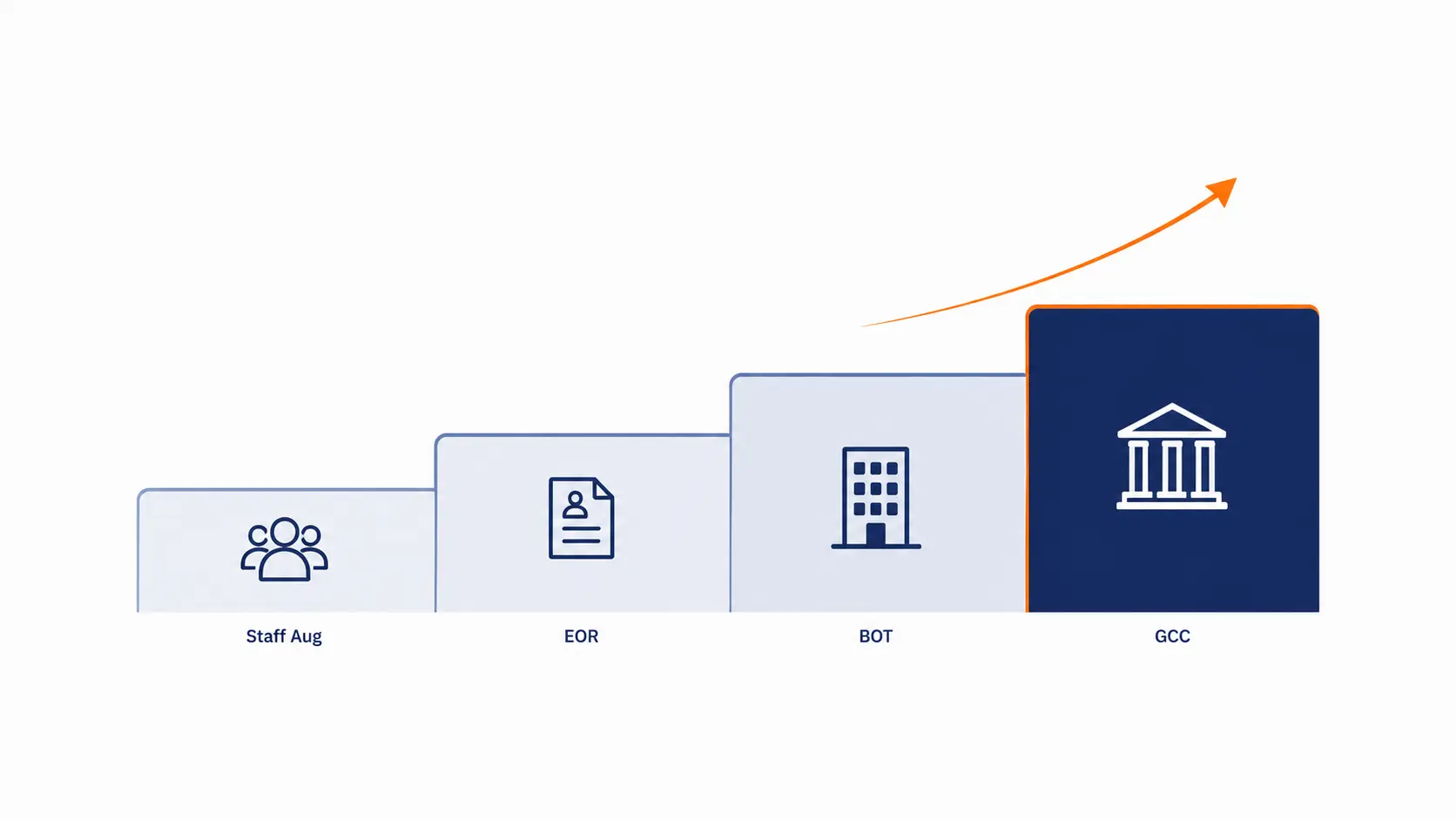
Staff augmentation offers a different path by embedding external engineers and specialists directly into the company’s existing teams, processes, and toolchains. Instead of operating as a separate vendor unit, augmented staff work in the same sprints, on the same backlogs, and toward the same OKRs as internal team members, strengthening collaboration rather than creating a parallel organization. This integrated model preserves speed—because capacity can be added quickly—without sacrificing the visibility, standards, and architectural control leaders expect from internal delivery.
Crucially, staff augmentation is not just “more hands.” For AI and data initiatives, it is a way to selectively extend capabilities in areas where the talent gap is most acute, such as data engineering, MLOps, security, and responsible AI governance. Organizations retain strategic ownership—product management, architecture decisions, and risk appetite—while bringing in specialized engineers who can execute within those guardrails at scale.
How augmentation balances cost, quality, and speed
From a cost perspective, staff augmentation allows companies to tap into global talent markets and optimize the blended cost of delivery, without carrying full-time headcount for every skill set and every phase of the roadmap. As market conditions change, teams can scale up for intensive build periods and scale down during stabilization, while keeping institutional knowledge in place through long-lived augmented roles. This flexibility is especially important as organizations rethink workforce models and increasingly blend permanent, contract, and external talent to stay resilient
On the quality side, integrated augmented teams can adopt the same engineering standards, review practices, and observability as the core team. When these engineers participate in architecture reviews, design sessions, and retrospectives—not just ticket queues—they develop a deep understanding of the business context and risk profile, leading to more robust models and data pipelines. Rather than trading quality for speed, companies can use augmentation to enforce standards consistently across time zones and functions.
Speed improves not only because the team is larger, but because work can follow a “follow-the-sun” cycle across locations. With clear handoff routines, well-defined acceptance criteria, and shared tooling, augmented teams can continue progress while onshore teams are offline, compressing delivery timelines without creating burnout. When governed properly, this model turns geographic dispersion into a structural advantage instead of a communication burden.
Offshore hubs as compliant, scalable engines
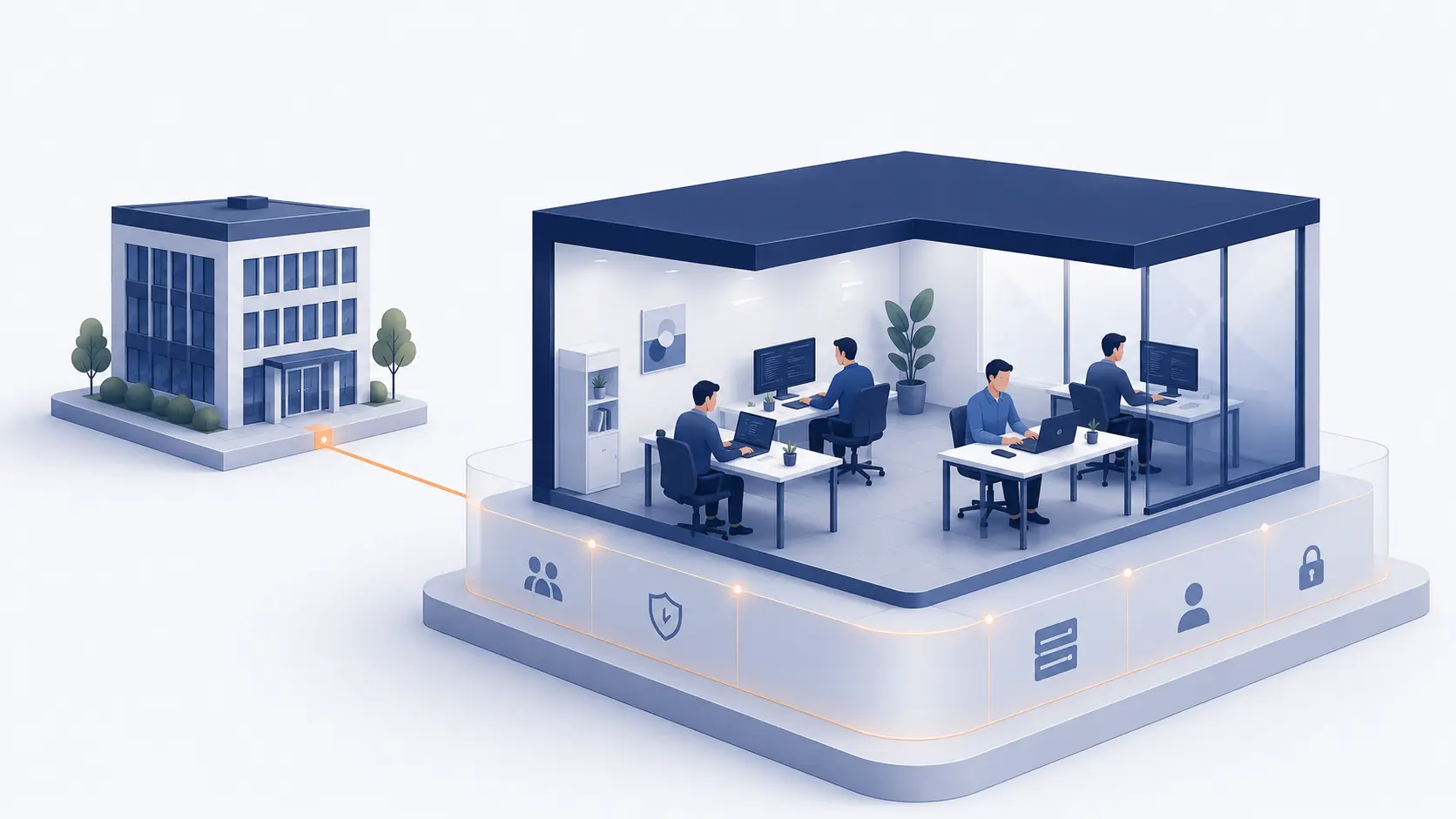
Offshore hubs are no longer just cost centers—they have become strategic engines for AI, cloud, and data-heavy workloads. Many organizations in highly regulated sectors are already leveraging distributed delivery centers to access specialized skills while still operating under strict controls for data privacy, cybersecurity, and operational resilience. The key shift is treating these hubs as integrated extensions of the core tech organization, not isolated outsourcing units.
Regulators and industry bodies are also raising expectations for AI governance, data protection, and model explainability. Boards and executives increasingly cite AI risk as a top concern, and surveys show that organizations scaling AI successfully tend to invest heavily in governance frameworks, risk controls, and responsible AI practice. Offshore hubs that embed these practices—secure environments, access controls, audit trails, and documented workflows—enable companies to scale AI and data work globally without losing compliance readiness.
Pitfalls of cheap, low-quality outsourcing
Organizations that focus purely on the lowest hourly rate often encounter the same set of problems. Low-quality engineering and weak data practices create hidden costs: more defects in production, more rework, and slower feature delivery, all of which erode any headline saving from cheaper rates. In AI and data systems, the impact is multiplied, because technical shortcuts can compromise model fairness, robustness, and explainability, exposing the organization to reputational and regulatory risk.
There is also a structural risk in relying on fragmented, transactional vendors. When architecture decisions are made without alignment to the company’s long-term strategy, the technology landscape can fragment into siloed services, duplicated logic, and opaque models that are hard to audit or evolve. Eventually, leaders find themselves constrained by a patchwork of systems that are expensive to change and difficult to bring under a unified governance framework.
Structured augmentation as an alternative
Structured staff augmentation offers a more sustainable alternative by combining flexibility with intentional design around communication, culture, and context. Leading organizations define clear operating rhythms for augmented teams—shared standups, planning, demos, and retrospectives—so that external engineers are working in the same cadence as internal teams, not in a separate “vendor lane”. Metrics and dashboards track productivity, quality, and incident trends across the combined team, ensuring leaders can see the real impact of augmentation on outcomes.
Culture and engagement matter just as much. Instead of treating augmented engineers as interchangeable resources, effective models invest in onboarding, shared values, and feedback loops that encourage proactive risk flagging and idea-sharing. This is especially important in AI and data projects where experimentation, ethical considerations, and iterative learning are central to success. When external engineers feel ownership and understand the mission, they are more likely to contribute beyond the ticket in front of them.
Governance, compliance, and knowledge transfer
Governance is the backbone of any scalable staff augmentation strategy. Clear responsibility assignments, decision rights, and escalation paths across product, engineering, and risk functions reduce ambiguity and help distributed teams move quickly without crossing red lines. Organizations that scale AI successfully tend to formalize governance structures—champions, councils, and standardized processes—to ensure that innovation is matched with accountability.
Compliance, likewise, cannot be treated as a final “go/no-go” check. Mature teams build security, data privacy, and auditability into their daily engineering workflows—access controls, change management, logging, and documentation—so that AI and data systems remain inspection-ready by default. Structured knowledge transfer is the final piece: pairing, documentation standards, and planned transitions ensure that critical know-how accumulates inside the organization over time rather than remaining with any single vendor or location.
Building a balanced operating model
For technology-driven organizations, the real challenge is not choosing between cost, quality, and speed—it is designing an operating model that systematically balances all three. Strategic staff augmentation, especially when built on top of well-governed offshore hubs, offers a way to extend capacity, access scarce skills, and move faster without losing ownership or increasing risk.
As AI reshapes products, operations, and customer expectations, companies that blend internal talent with integrated, governed external teams will be better positioned to scale safely and sustainably than those relying on ad hoc outsourcing or purely internal hiring alone.
If your teams are feeling the pressure of shipping faster without compromising on quality or compliance, this is the moment to rethink how you build. Strategic staff augmentation that is grounded in governance, security, and knowledge transfer, can give you the capacity and resilience to scale AI and data initiatives with confidence.
TechKraft partners with technology-driven companies to design offshore-augmented models that balance cost, quality, and speed while keeping product ownership in your hands. If you are exploring how to extend your engineering capacity or want to validate whether staff augmentation is the right fit for your roadmap, connect with our team to discuss your context and options. Schedule a Meeting today.
Stop Managing. Start Shipping.
Stop fixing “outsourced” spaghetti code.
Deploy an ISO 27001-certified engineering pod that hits your internal linting standards and security benchmarks from Day 1.